Kominn Heim

“Kominn Heim” (Icelandic) translates to “Come Home” in English.
The theme of the song revolves around the cycle of life in its most natural essence, focusing on the unacceptable value of death, which in some cases can become not only acceptable but desirable. However, regardless of human or animal awareness, for nature, death is merely a change that can transform or generate other forms of life in a cycle whose end cannot be determined.
A creature that dies and returns to the earth can become the nourishment, the life, of a living creature, in a cycle governed by the impenetrable mystery to which we all belong.
Death is the ultimate transformation, and a plant that dies near a river, whose remains are carried to the sea at an unknown distance, if it returns to the earth, it does so completely transformed from what it was.
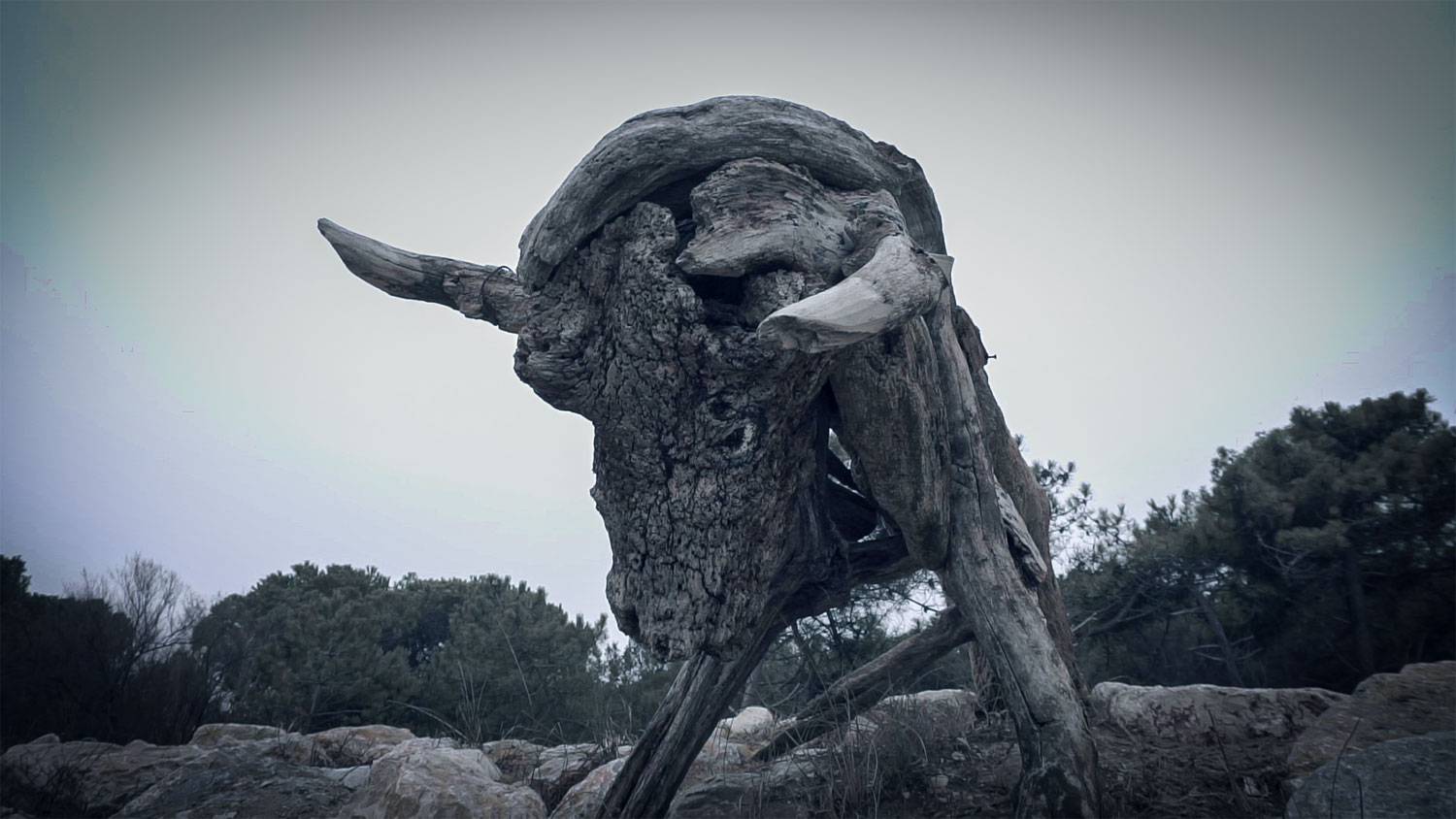
Some of these remains have become part of Enrico Menegatti’s sculptures, artworks that seem to breathe life back into dead wood stripped of its ancient grandeur.
Works that, from the moment we first saw them, we recognized as a perfect representation of “Kominn Heim.”
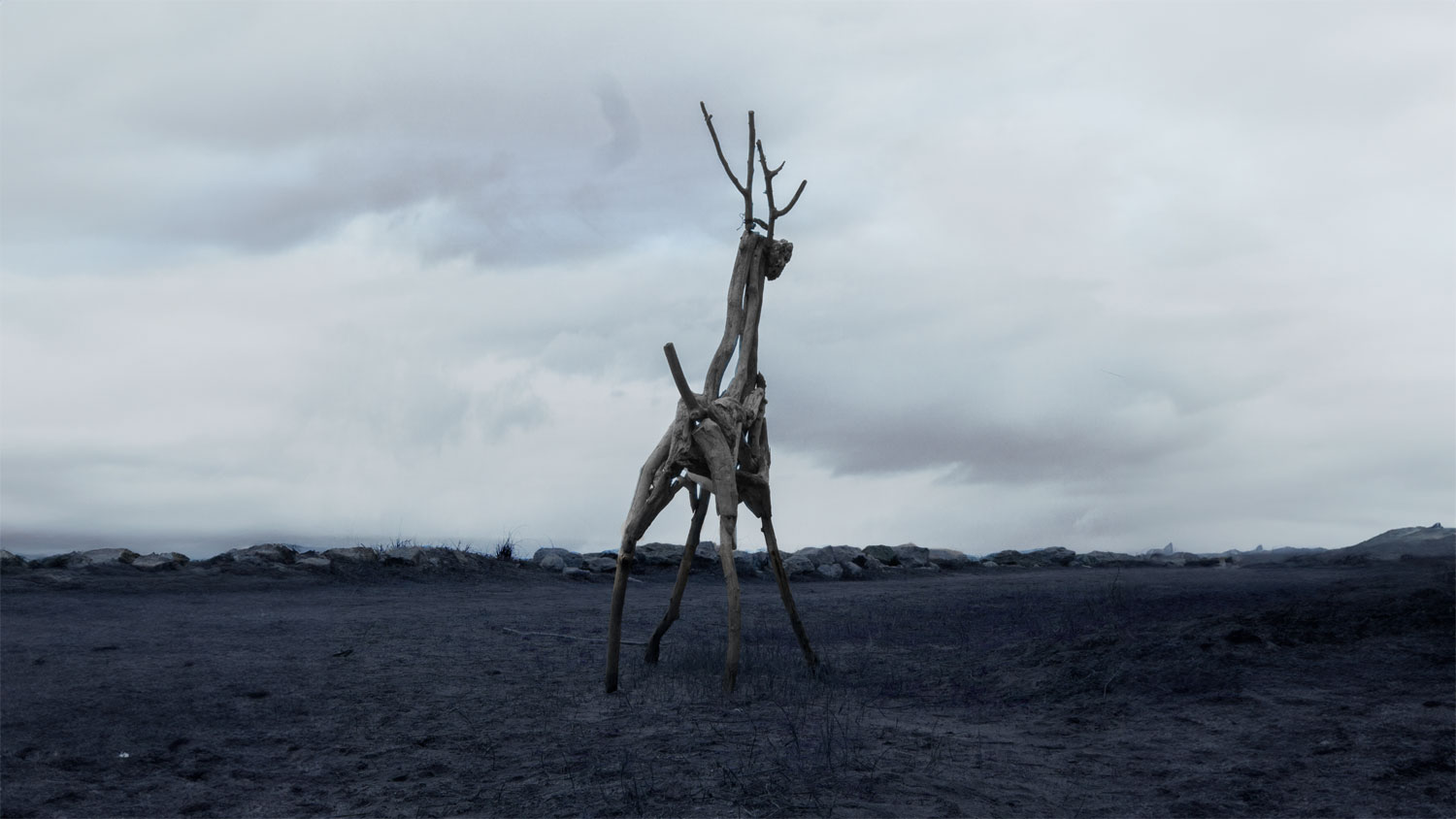
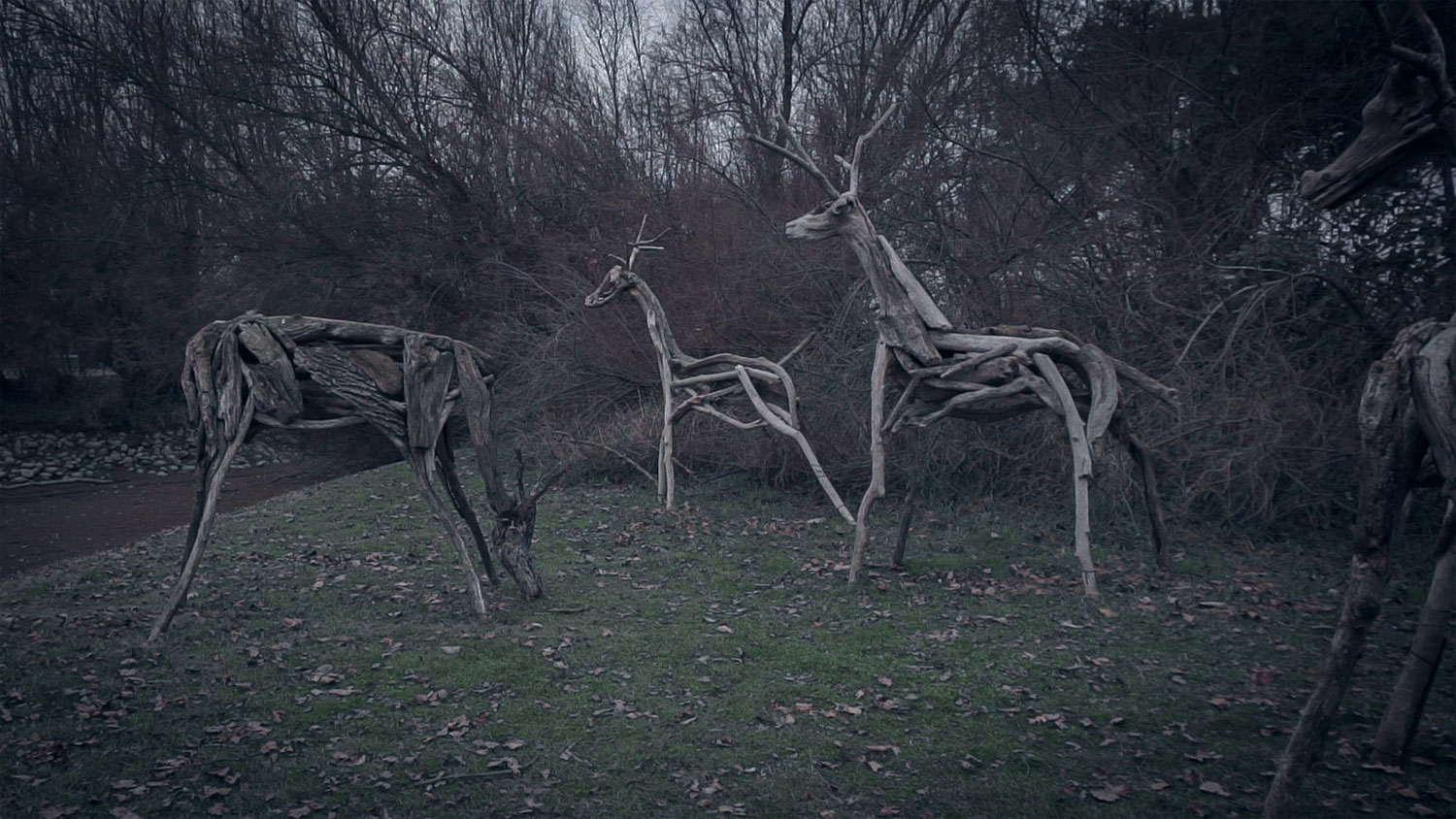
For years, the artist has made his animals appear in the territory where he lives, along the beach or in the adjacent pine woods; no one knows when or where they will appear. But everyone, with regret, knows when someone else decides to kill them again. Sometimes, too often, they have been vandals; other times, it is nature itself that finishes its work and brings them back home.
The waves evoke this eternal giving and taking, an endless cycle like the unreachable horizon of the sea. What can be more distressing? Death itself or the suffering to the point of desiring it?
The Location:
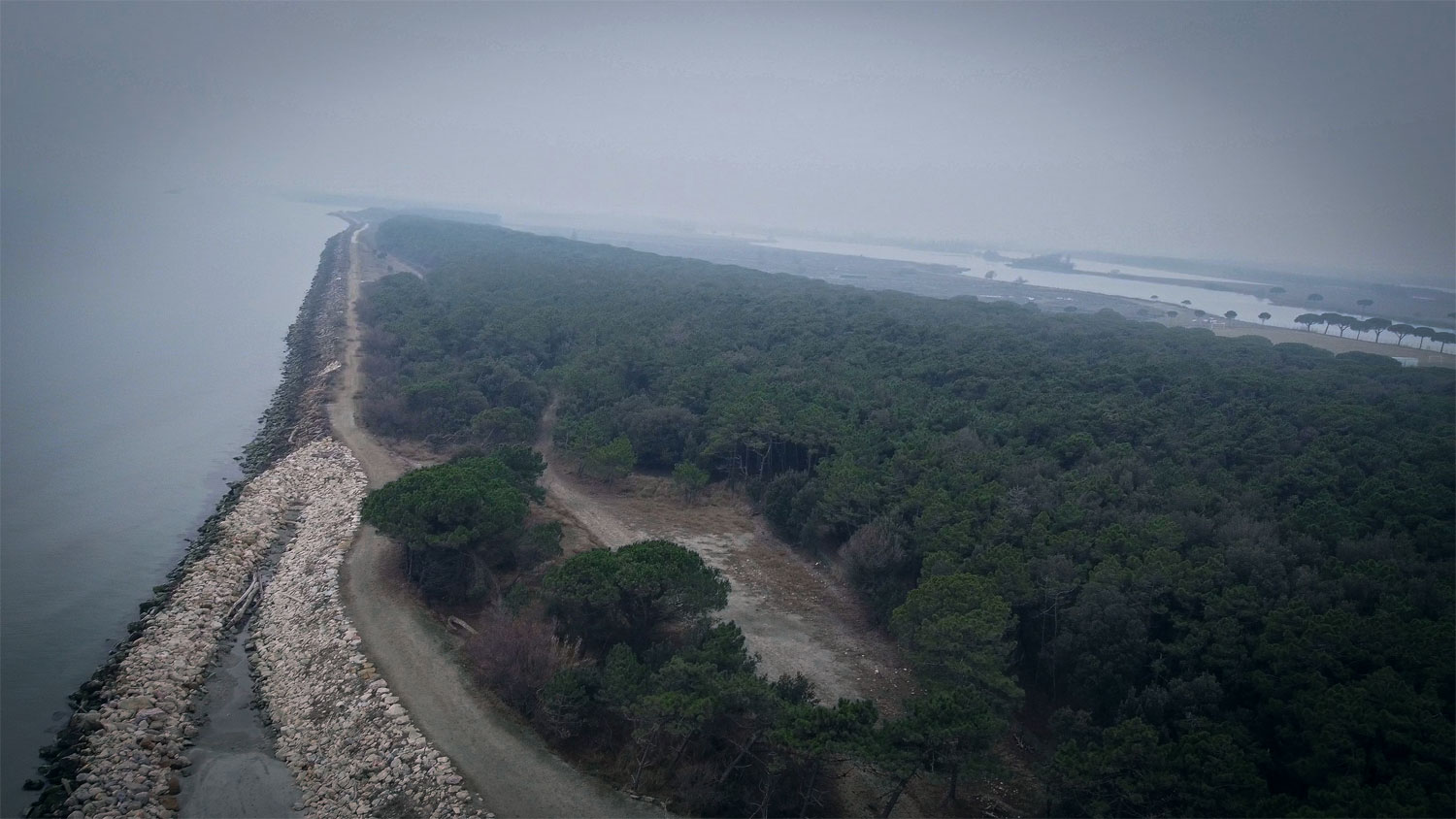
The video was shot on beaches along the Adriatic Sea, between Lido Nazioni and Lido Volano, near the municipality of Comacchio (Ferrara), in Northern Italy.
Unfortunately, some sculptures featured in the video were vandalized and destroyed in the months following. To protect Enrico Menegatti’s precious work, many of his pieces have been transferred to the park near the Abbey of Pomposa, in Codigoro (FE).